EasyFull day
Full Day Jeep Tour
From
60 JODper person
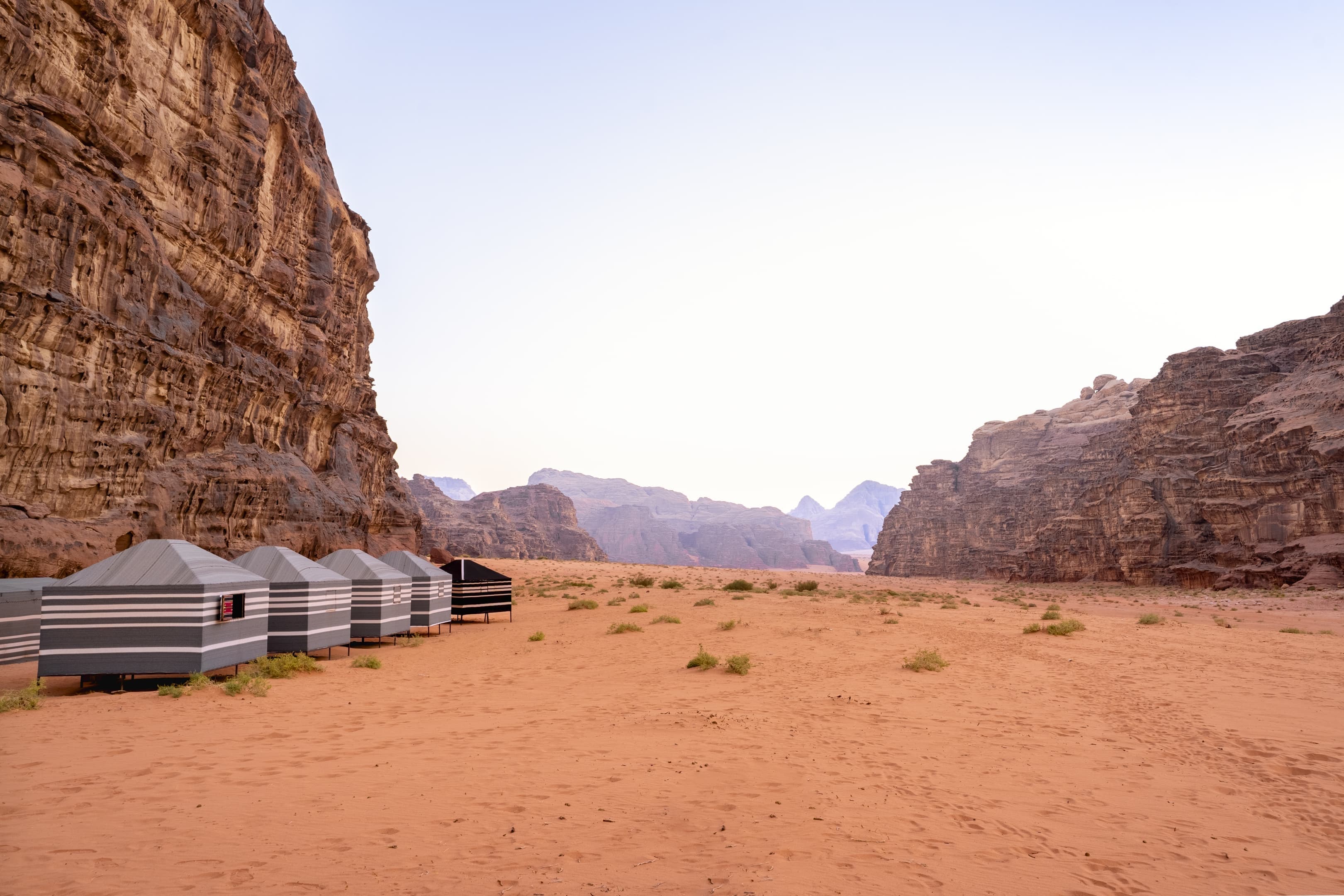
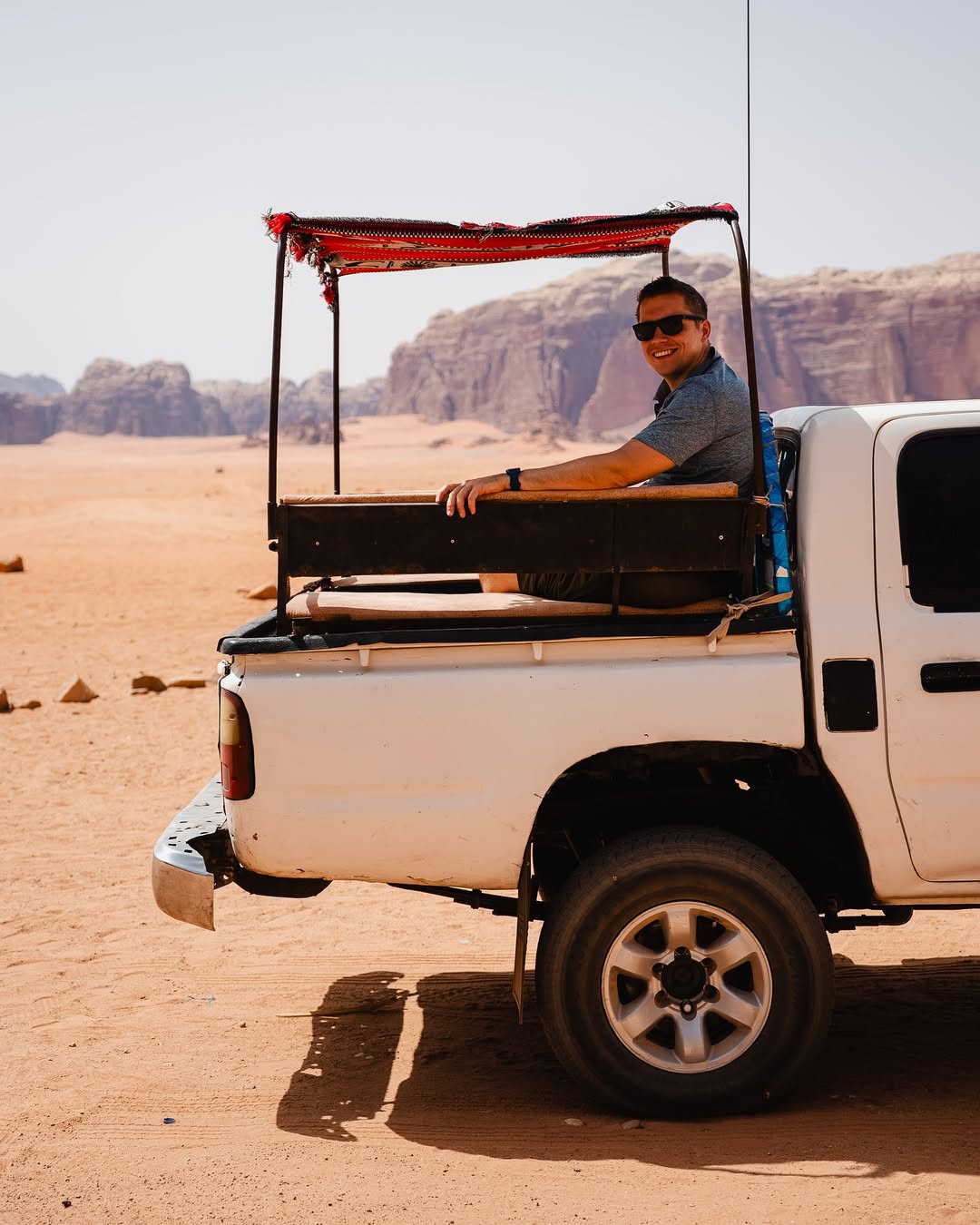
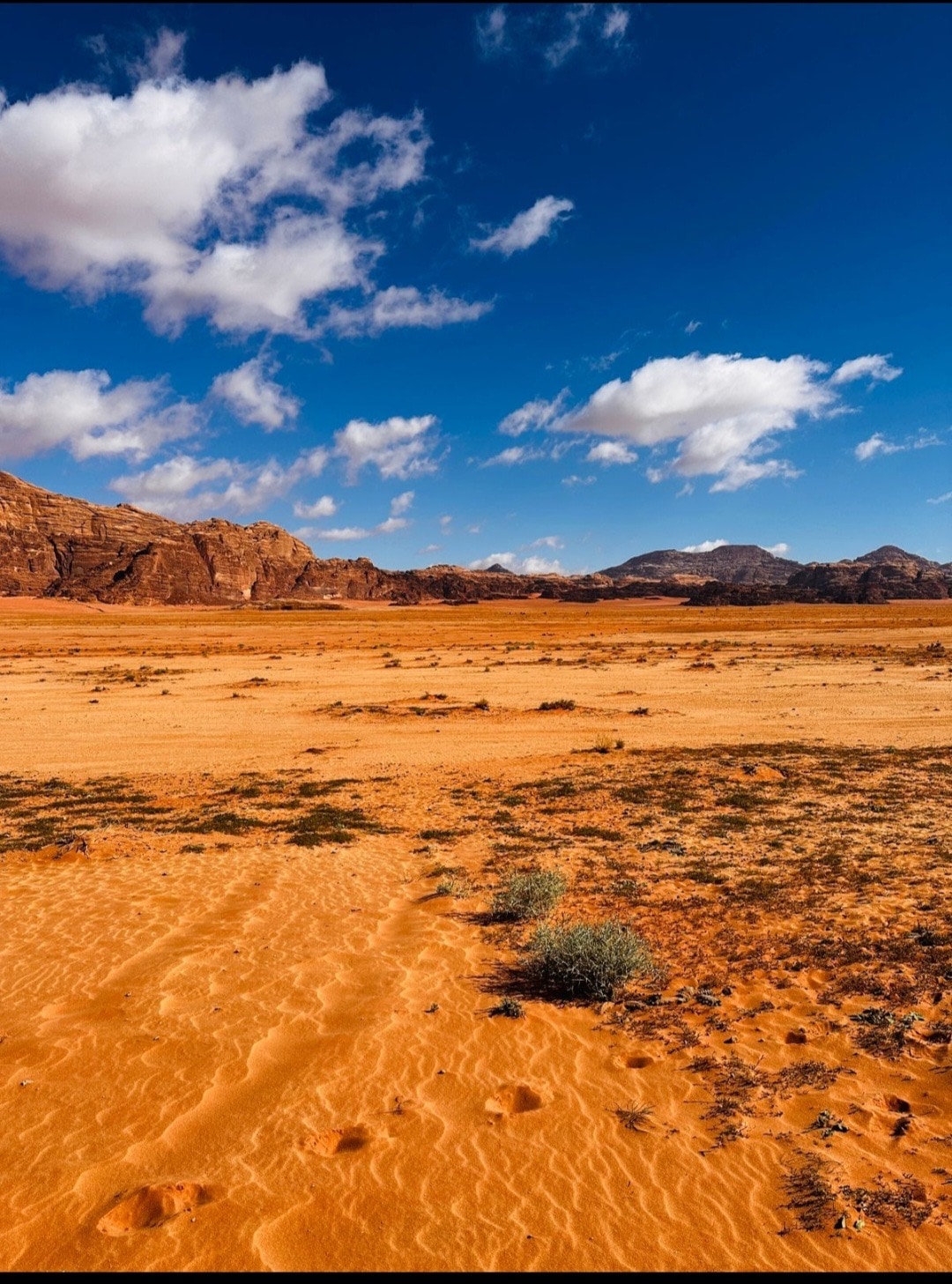
Wadi Rum — the Valley of the Moon — is 720 square kilometres of UNESCO-protected desert in the south of Jordan, near the Saudi border. The landscape is half a billion years old: granite mountains rising in folded sandstone cliffs, red and yellow dunes between them, ancient seabeds folded into the rock.
The Bedouin tribes of the Zalabia and Howeitat have lived here for thousands of years. Nabataean traders carved their names into Khazali Canyon in the fourth century BC. Lawrence of Arabia rode through these wadis during the Arab Revolt of 1917. Filmmakers came later — Wadi Rum has stood in for Mars, for Tatooine, for any landscape strange enough to be otherworldly.
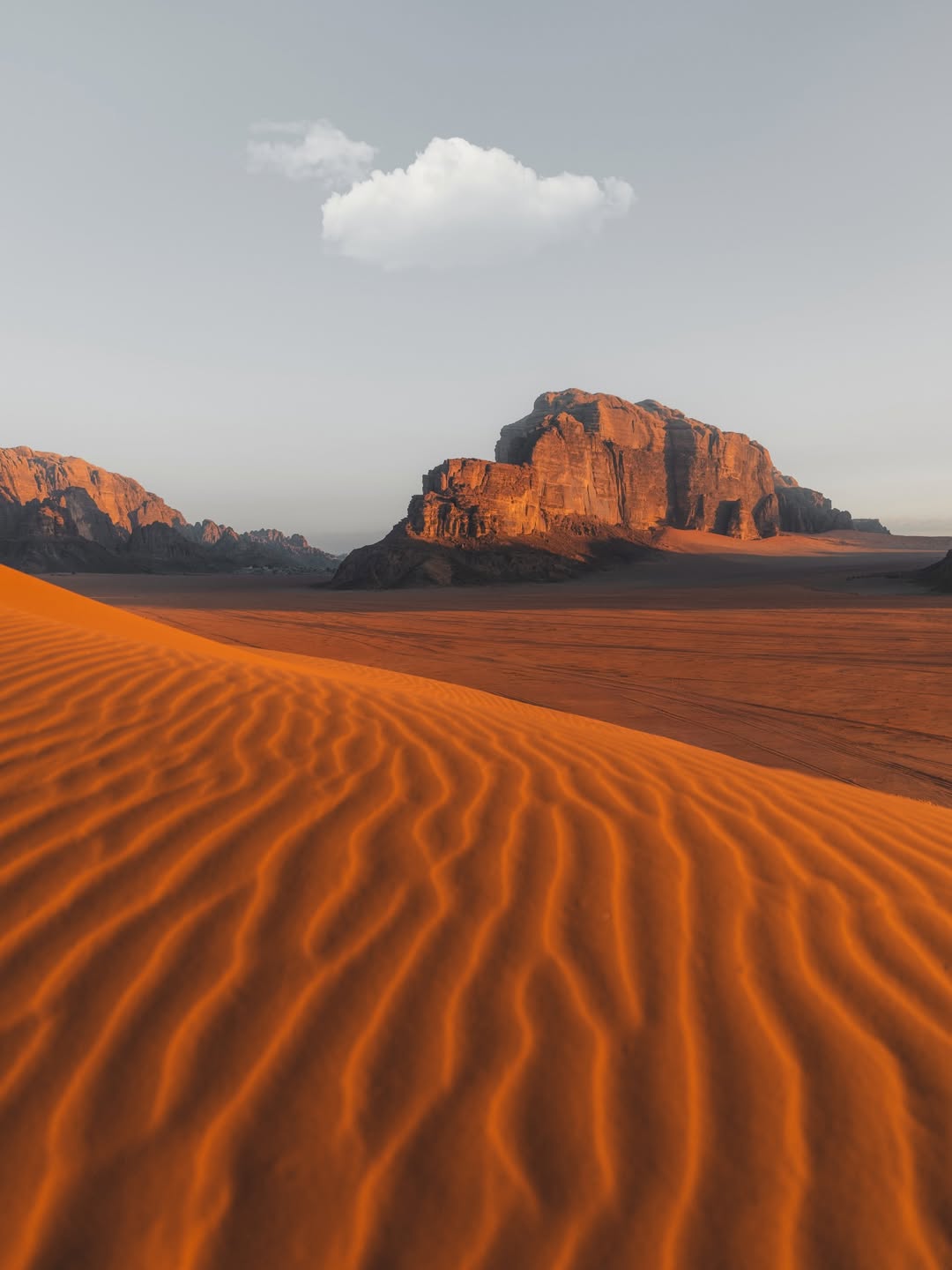
Wadi Rum desert calling
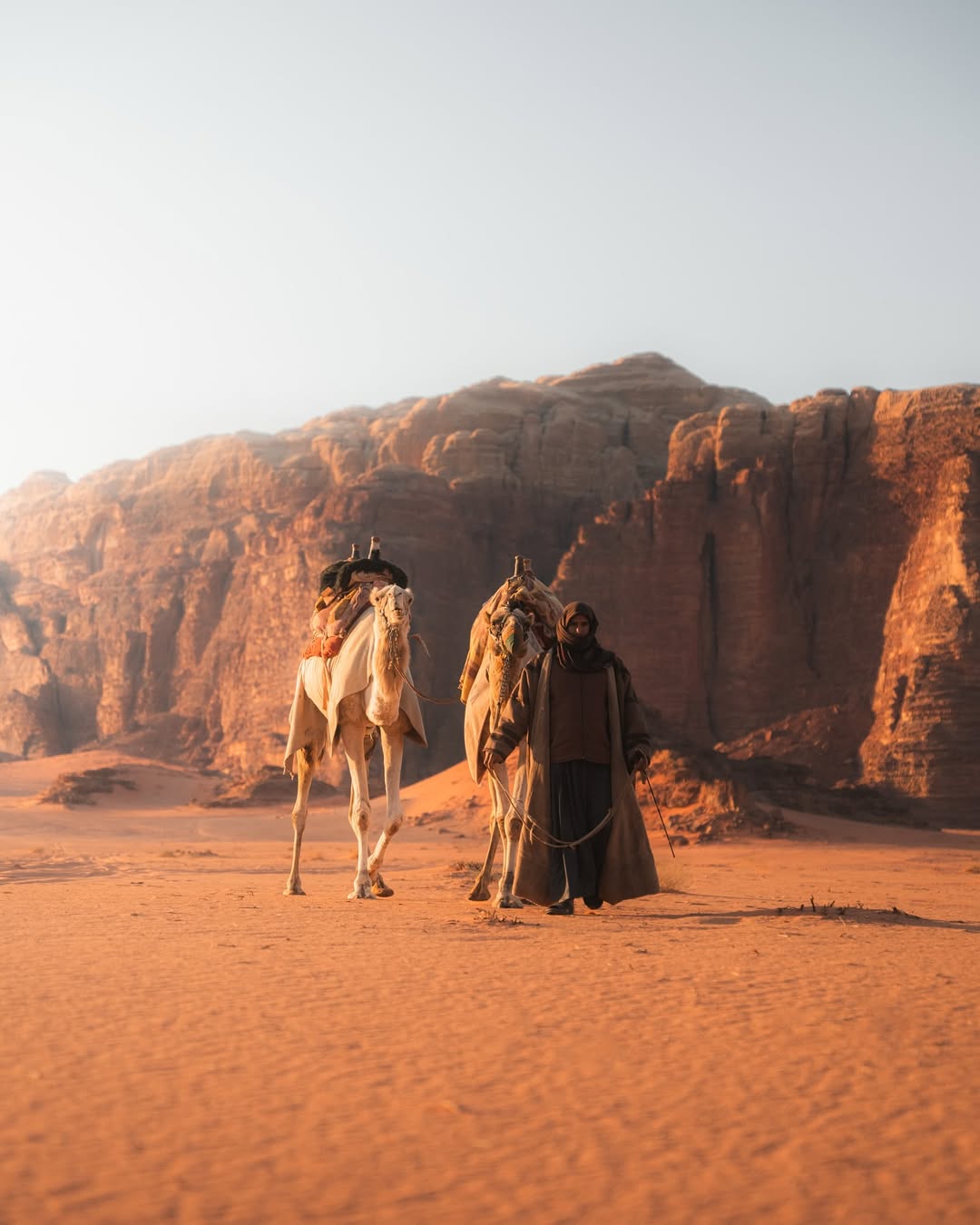
Bedouin means desert dweller. For three thousand years, the families of this valley have moved with the rain, the seasons and the herds. Today most have houses in the village of Rum, but the tents are still pitched in the desert, the fires still burn at dusk, and the rules of hospitality are unchanged.
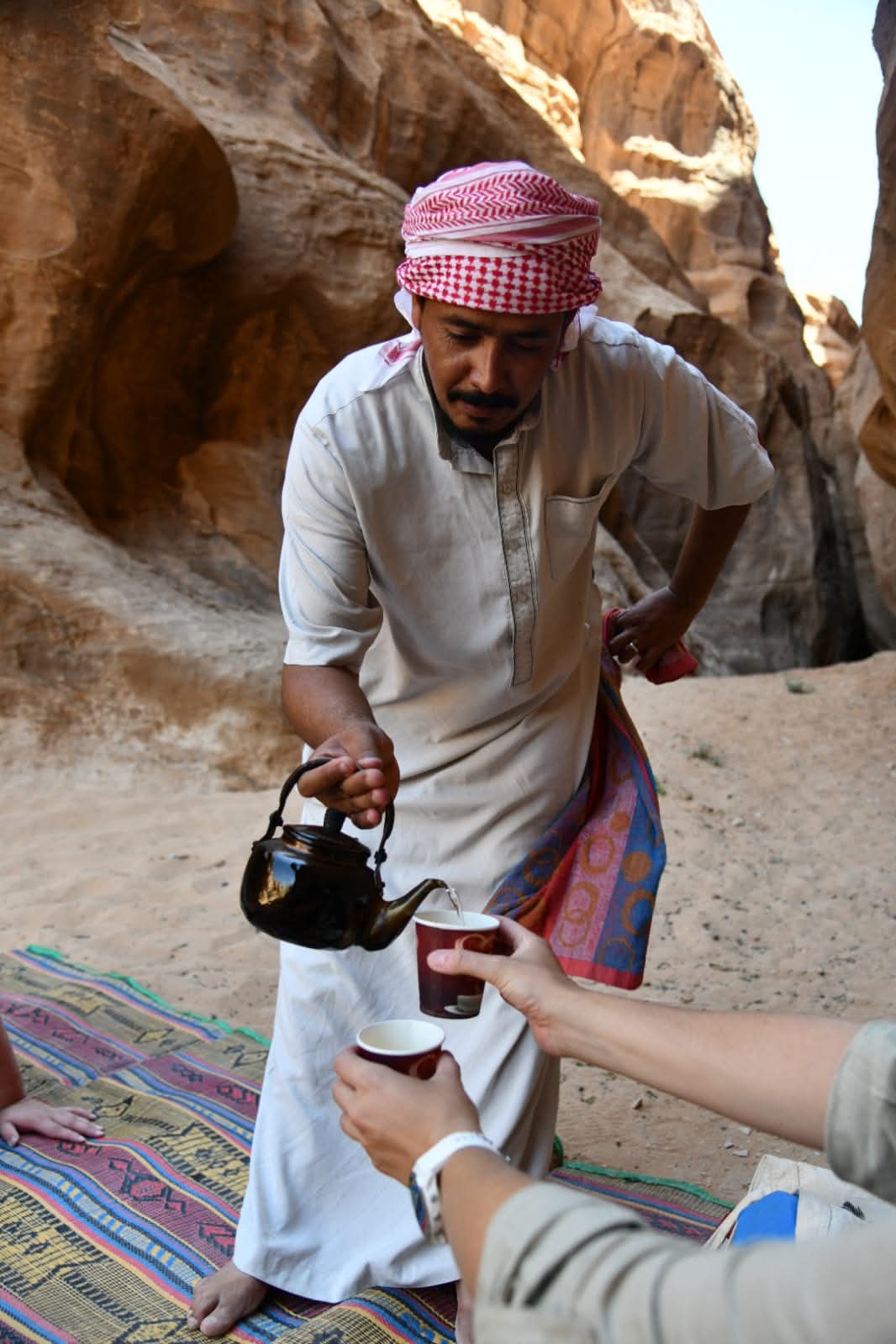
When you arrive at a Bedouin camp, the first thing offered is tea. Then coffee. Then food. You are a guest before you are anything else — name, nationality and reason for your visit can wait three days. This is not theatre. It is what kept travellers alive when the next water was a day's ride away.
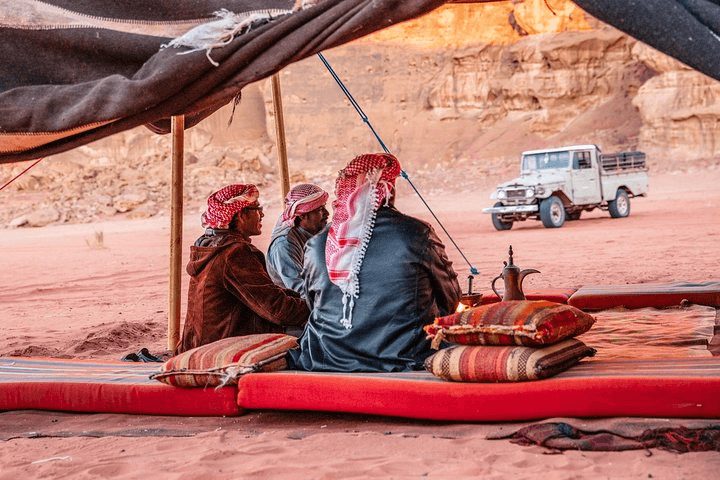
Bedouin tea under the tent
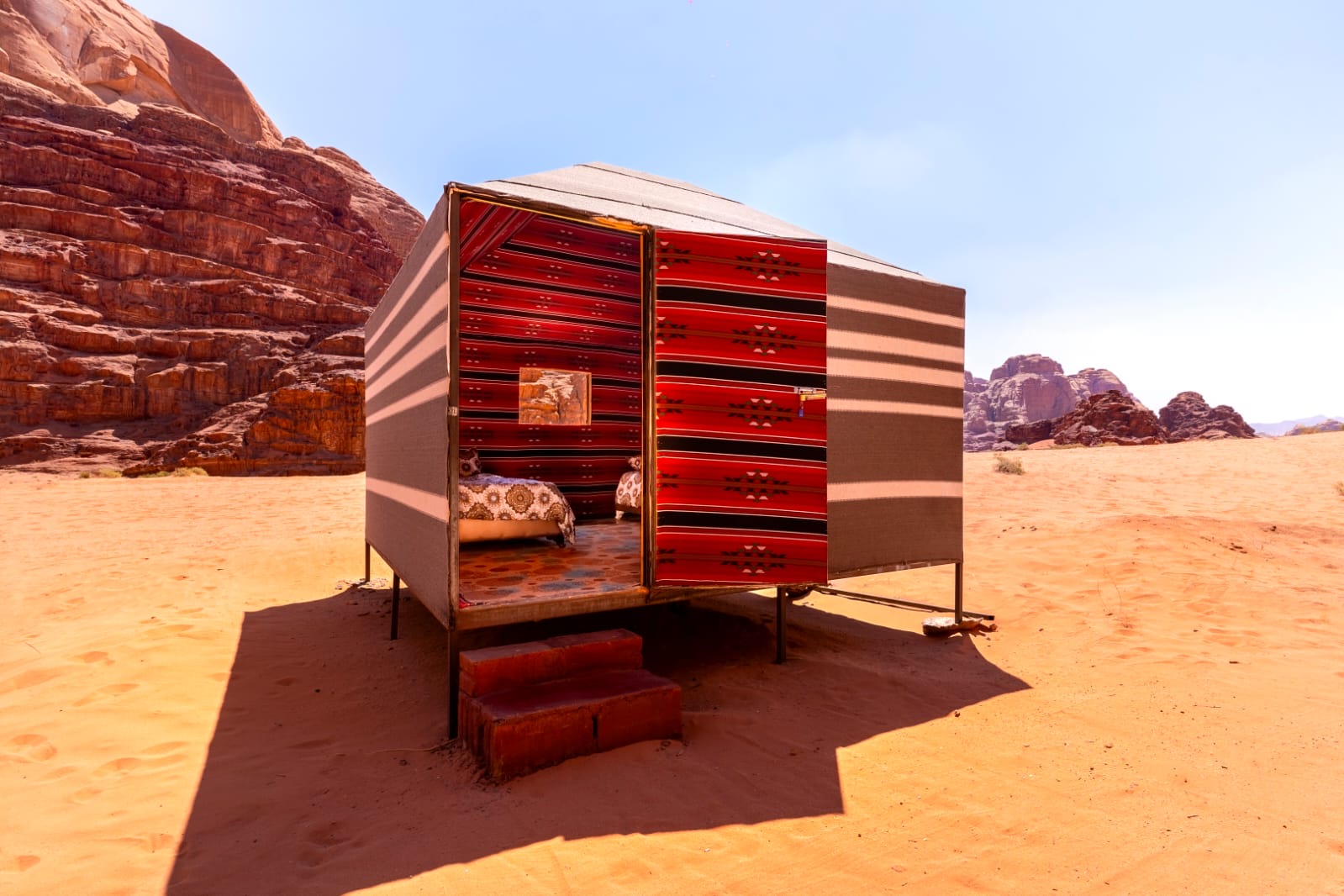
— Nightsoul Camp tents at sunset
Goat-hair tents in the Bedouin tradition. Wooden floors, layered carpets, lanterns. The way the desert has welcomed travellers for centuries — only quieter, because there are fewer of you.
Four secluded outdoor spots near the camp, each with mattresses, sleeping bags and liners. Drift to sleep with the Milky Way as your last view of the day. We will wake you for sunrise if you ask.
For longer tours: nights spent beneath an overhanging sandstone formation we call the cave. Carpets, mattresses, blankets, Bedouin tea, and the open desert. No walls, no light, no other camp within sight.
From a single sunrise to a week beneath the stars
Wadi Rum is a geology textbook you can walk through. The lowest layer — granite that solidified deep underground in the late Precambrian, more than 540 million years ago — is exposed at the base of every mountain. Above it, hundreds of millions of years of sandstone, deposited by ancient rivers and shallow seas.
Jabal Um ad Dami in the far south rises to 1,854 metres — Jordan's highest peak. From its summit on clear days, the Red Sea is visible. Jabal Rum, opposite the village, rises 1,734 metres. Between them: a long backbone of red and yellow sand, broken by canyons carved over millions of years by water that no longer flows.
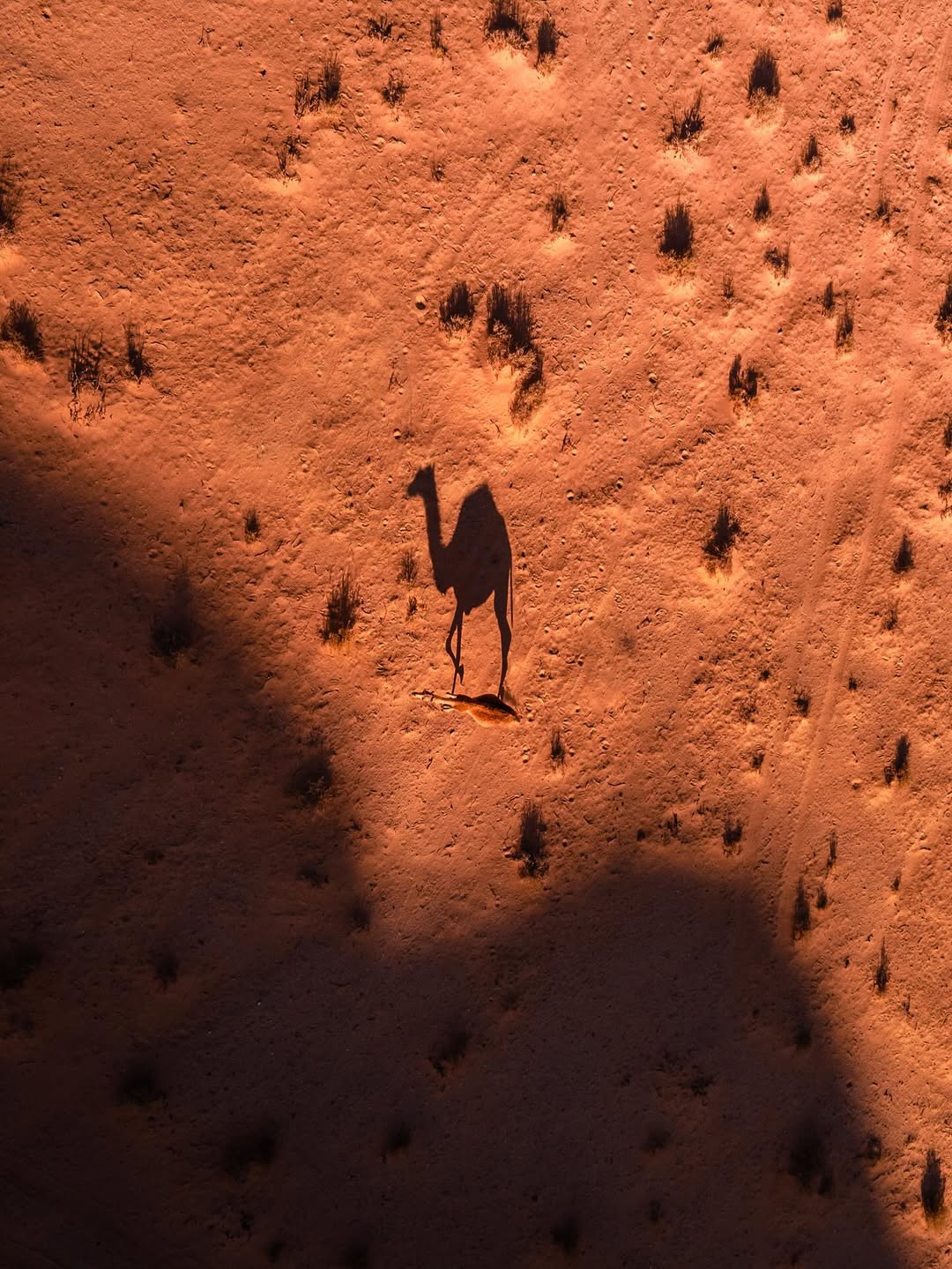
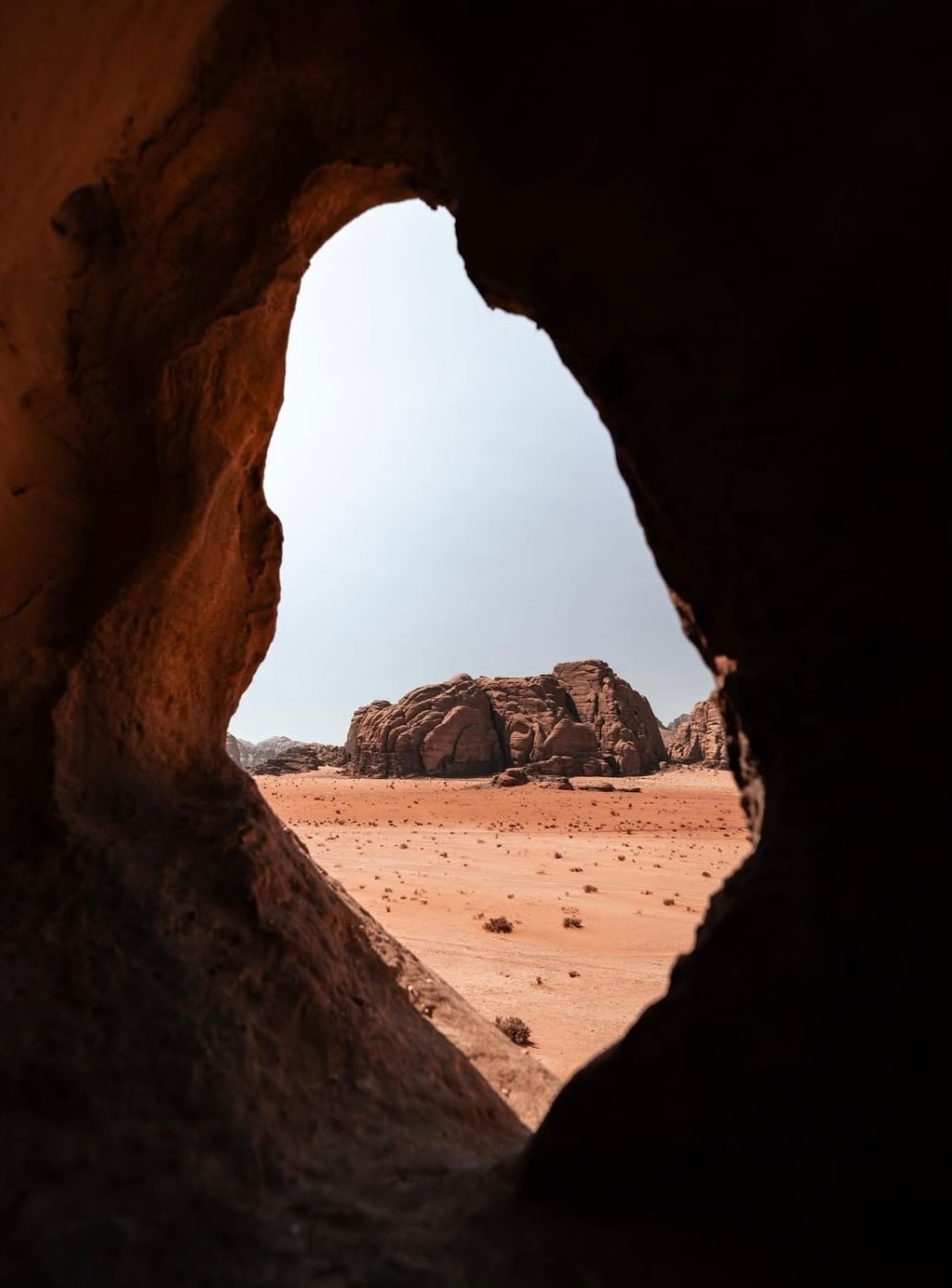
Wadi Rum is one of the darkest skies on Earth. There are no cities for sixty kilometres in any direction. Light pollution is, effectively, zero. Half an hour after sunset, the first major constellations appear. An hour after, the Milky Way arches overhead like a river of light.
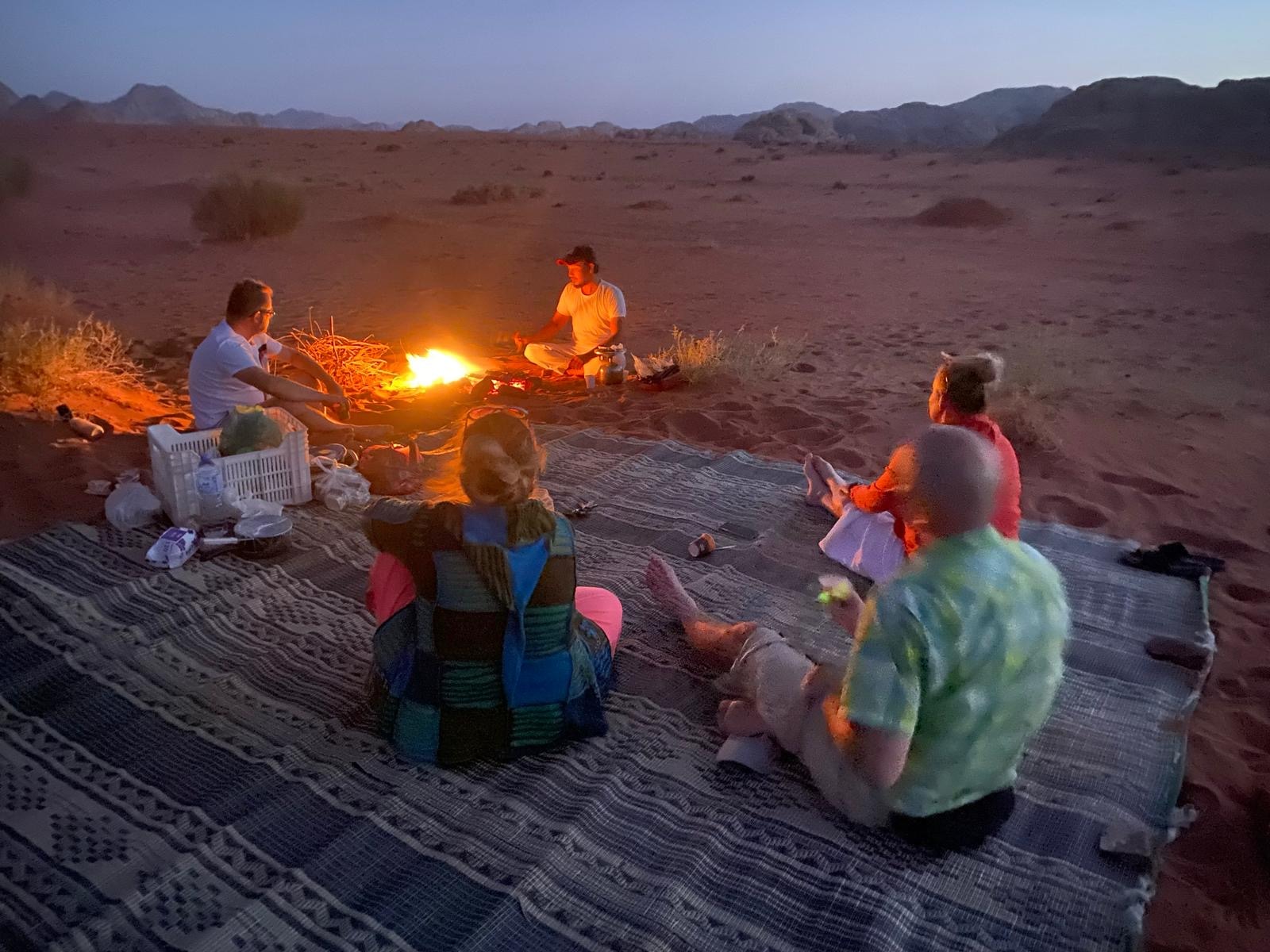
We host stargazing every night at the camp — mattresses on carpets, blankets, tea by the fire, a Bedouin guide who knows every constellation by its older Arabic name. Children stay up later than they should. Adults find themselves quiet in a way they did not expect.
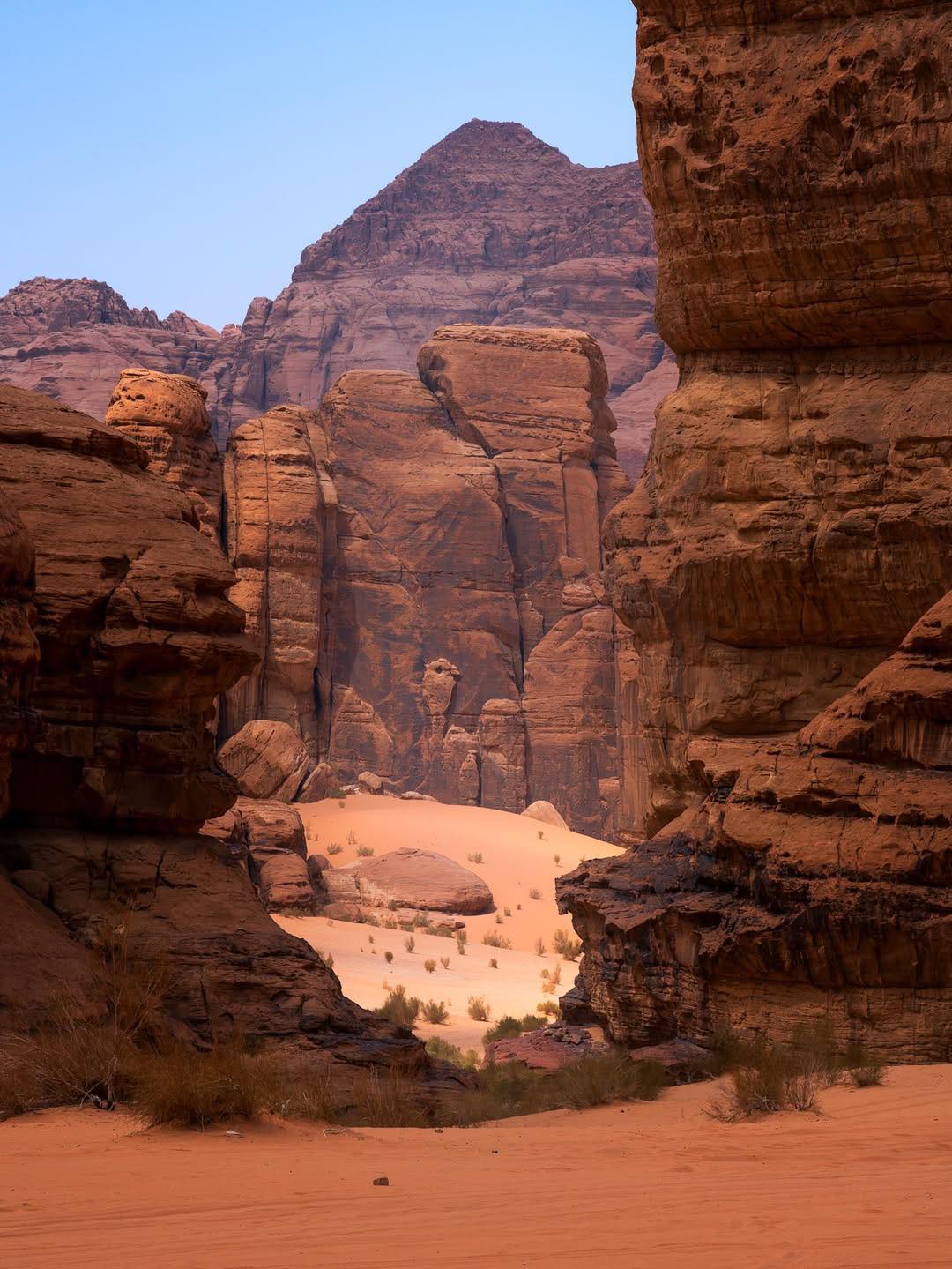
Cliffs at the edge of night
Bedouin cooking is patient. Three dishes worth coming for.
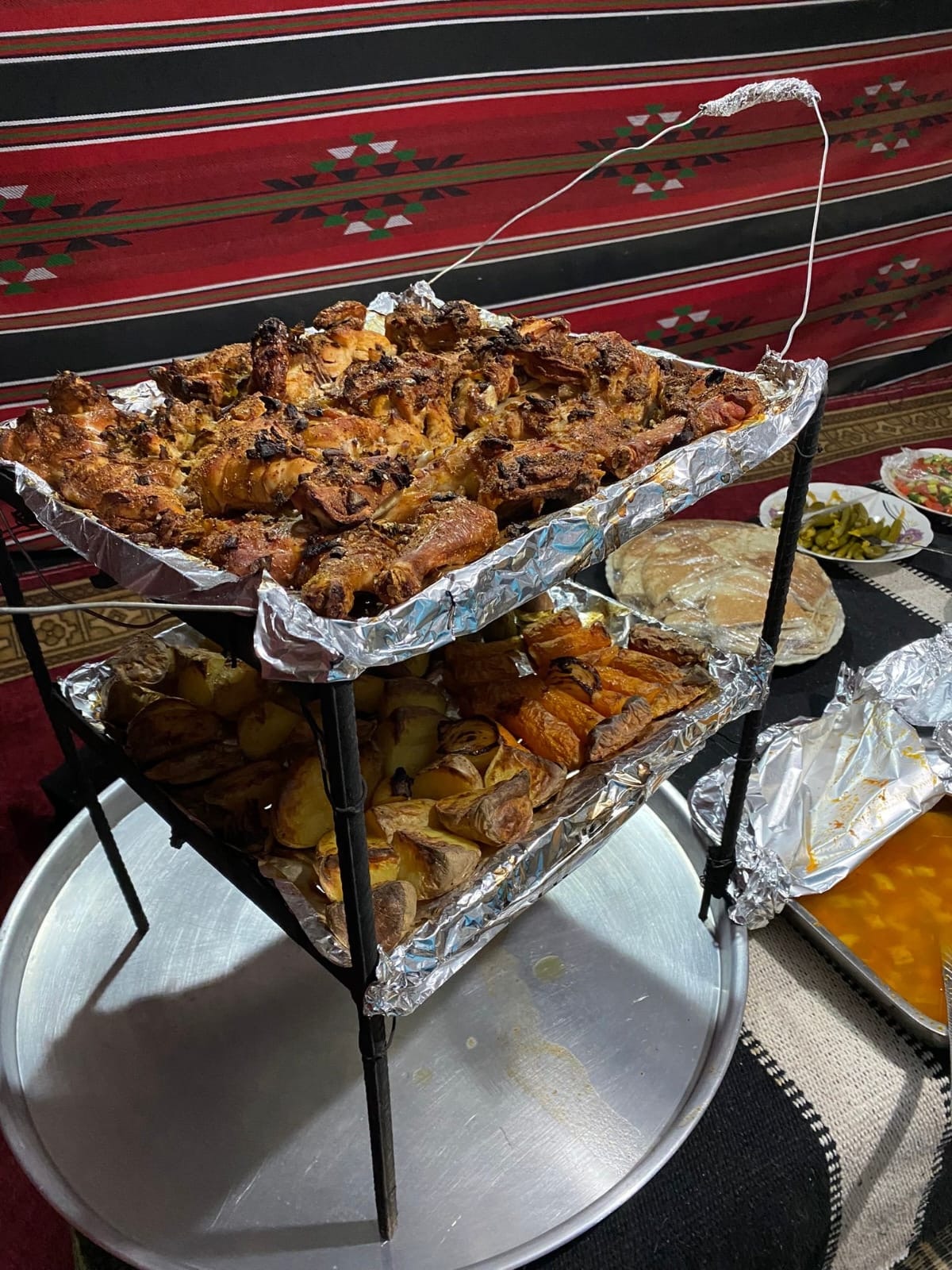
Lamb or chicken rubbed with spice, layered with onion and vegetables, lowered into a sand pit over hot coals. Two hours later, the smell pulls the whole camp.
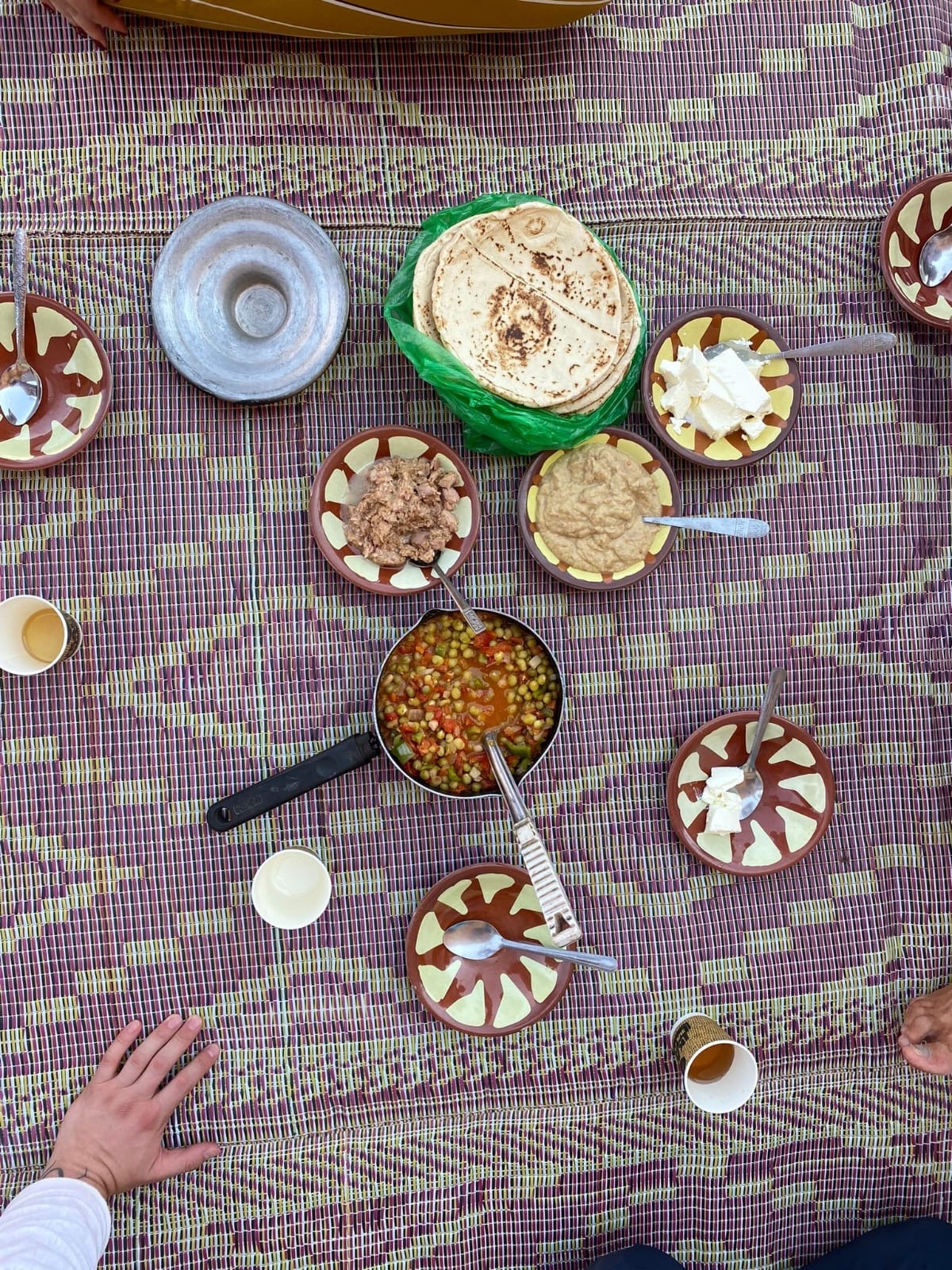
A tomato stew, fast and bright — onion, garlic, tomato, sometimes pepper. The lunch we cook in the shade of a cliff.
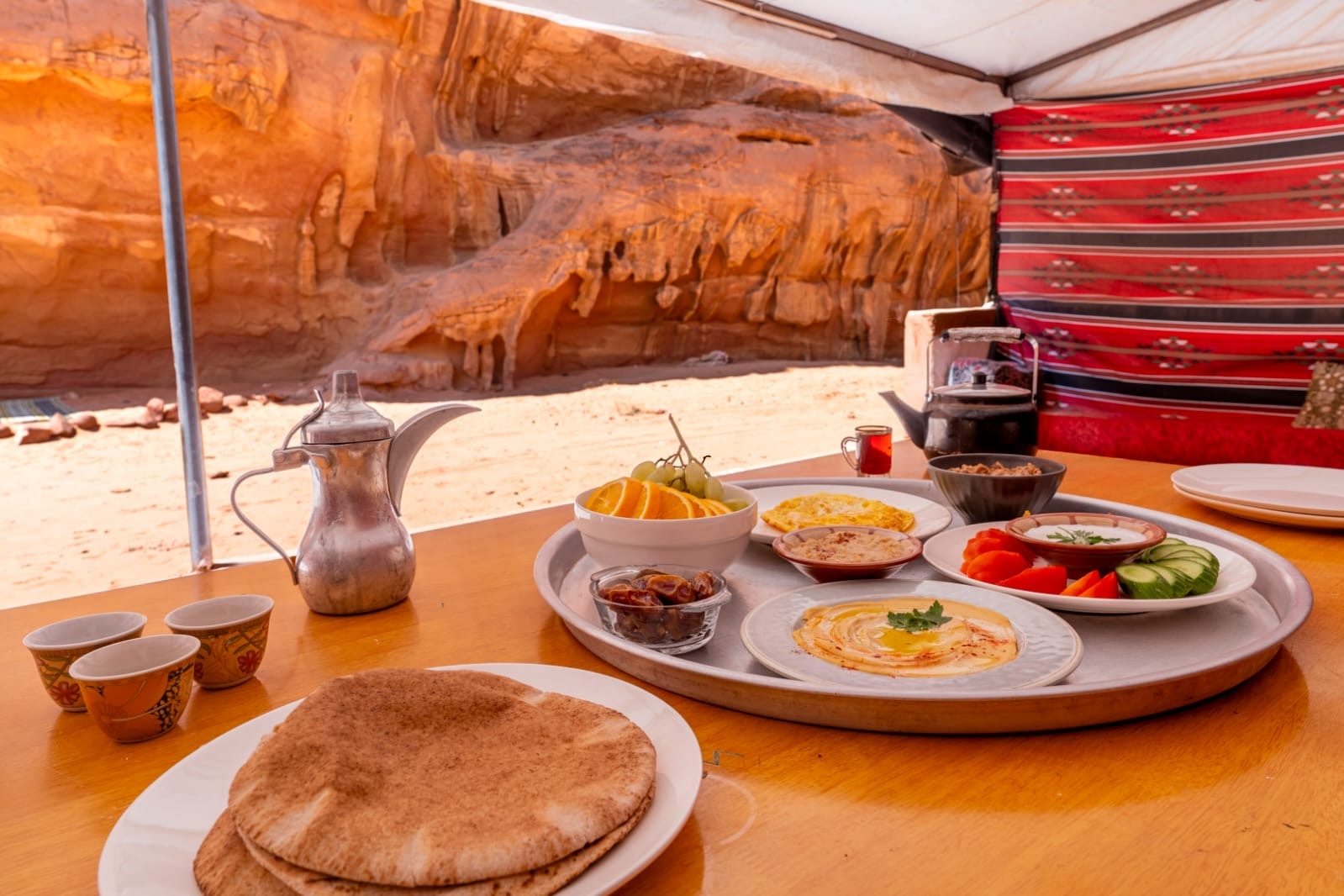
Tea steeped with wild sage from the dunes — strong and sweet. Cardamom coffee, bitter and light, poured three small times into tiny cups.