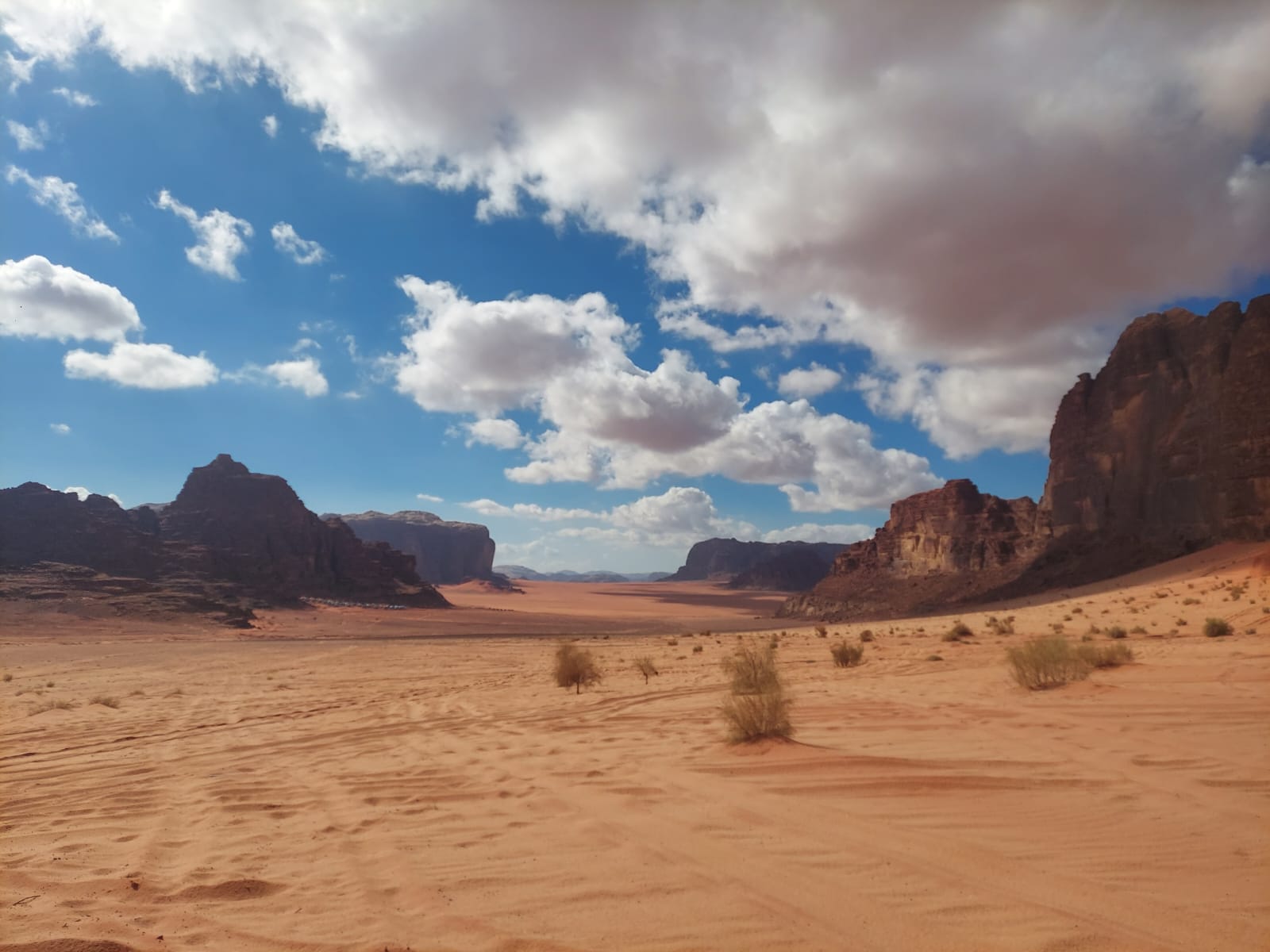
Wadi Rum
The Valley of the Moon
A protected UNESCO landscape. 720 square kilometres of red sand, towering sandstone, ancient inscriptions, and the silent dignity of a desert that has held travellers since the dawn of time.
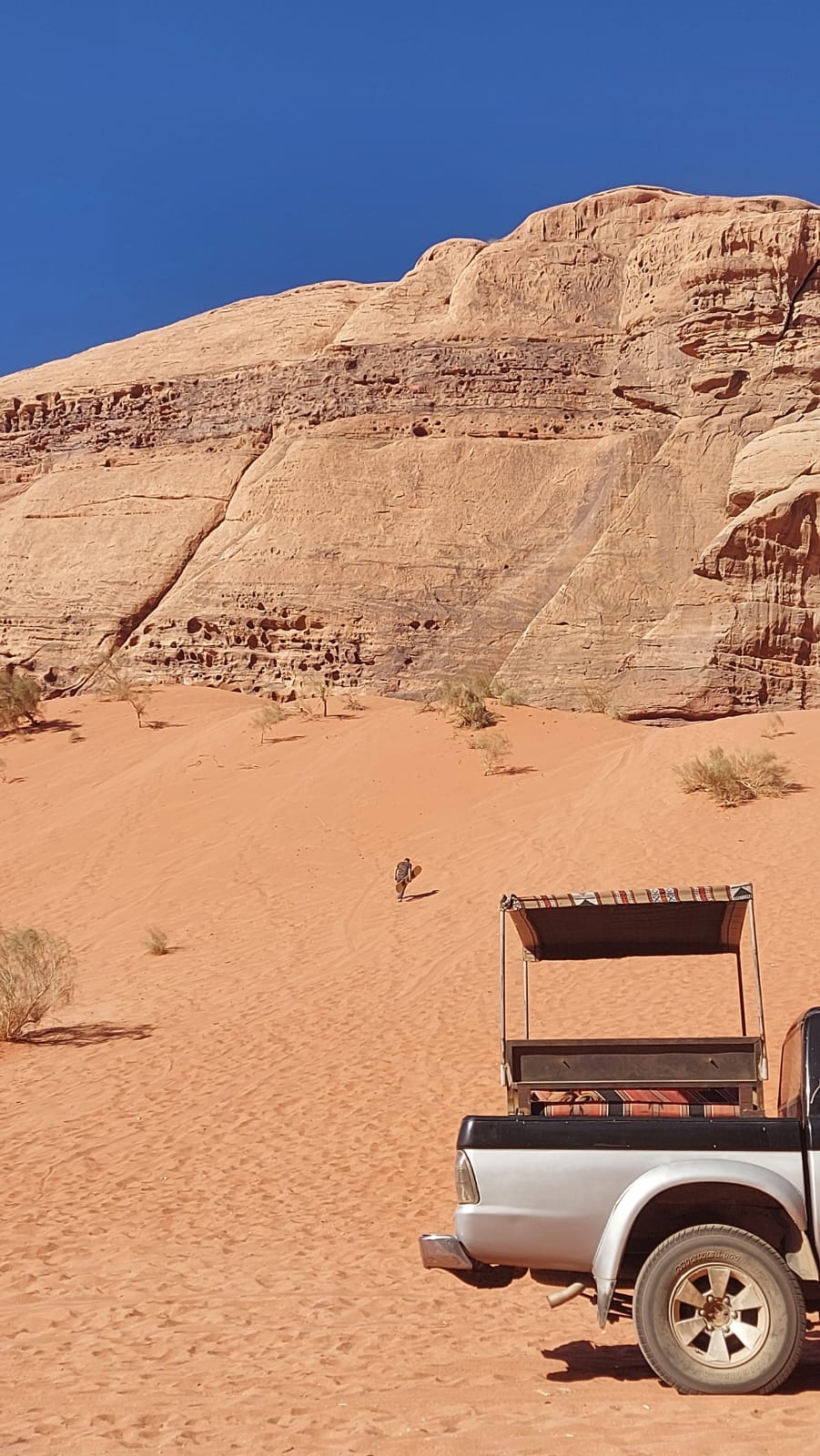
The land
The desert was carved into sandstone and granite over hundreds of millions of years. The sea once shaped these strange forms; today they rise as cliffs and arches across 720 square kilometres of protected terrain.
Flora
Native desert herbs traditionally harvested by Bedouins, spring-blooming wildflowers, and shrubs used for fuel. Near water sources grow figs, olives and mint — sustenance and shade for both wildlife and travellers.
Fauna
Camels are the most visible — they can survive a week without water. Foxes, hedgehogs, dormice and rabbits move mostly at night. Falcons and eagles ride the thermals above the cliffs. Reptiles and scorpions inhabit the rocks. The endangered oryx is protected nearby.
Weather & best time to visit
Pleasant year-round, with very little rain — only about fifteen days of rainfall a year. August averages 34°C with heat waves over 40°C. January averages around 14°C, with cold nights and occasional snowfall. Spring and autumn are golden; summer days are intense; winter nights are cold and clear.
What to wear & bring
What to wear
What to bring
How to get to Wadi Rum
The visitor centre is the gateway to the protected area — open 8:00 AM to 4:00 PM. Entrance: 7 JOD per international visitor; free for children under 12. Jordan Pass holders enter at no extra cost.
From Amman
- Car — 4 h 5 min · 320 km via the Desert Highway
- Bus — via Petra (3 h, 10 JOD) or via Aqaba (4 h, 10 JOD)
- Taxi — 4 h, ~110 JOD per vehicle
From Aqaba
- Car — 1 h · 70 km via the Desert Highway
- Bus — daily 8:00 AM, arrives 9:30 AM (15 JOD per person)
- Taxi — 25 JOD from city, 45 JOD from airport
From Petra (Wadi Musa)
- Car — 1 h 50 min · 112 km via the King's Highway
- Bus — daily door-to-door pick-up 6:00–6:30 AM (10 JOD per person)
- Taxi — 2 h, ~40 JOD per vehicle
From the Dead Sea
- Car — 4 h 15 min · 335 km via the Dead Sea Highway
- Taxi — 4 h, ~110 JOD per vehicle